
Agriculture · Botany · Horticulture · Horticulture
Mushroom Farming Research and Development
₹4,495.50₹4,995.00
Book details for Mushroom Farming Research and Development
Agriculture · Plant Pathology · Plant Breeding and Genetics
Nowadays, pests, diseases and chemical pollution in the agriculture field are today’s serious threat affecting crop productivity and soil health. The microorganisms reported have shown a significant effect on soil health and crop performance. Plant-parasitic nematodes represent a major threat to the agricultural production of different crops worldwide. Due to the high toxicity of chemical nematicides, it is necessary to develop new control strategies against nematodes. In this respect Filamentous fungi can be an interesting biocontrol agent and are able to reduce the damage caused by plant-parasitic nematodes directly by parasitism, antibiosis, paralysis and by production of lytic enzymes. However, the use of Trichoderma sp. in the crop field is reported to have a significant effect on yield and maintaining soil micro floral population. Trichoderma is a genus of fungus belongs to family Hypocreaceae and comprises more than 100 species. The use of Trichoderma tends to be beneficial as it is reported to reduce fertilizer dose, pesticide ratio in the crop field and enhances yield. Bioremediation and phytoremediation in association with microbes are innovative technologies having the potential to alleviate various soil pollution problems. It is widely used as a bio-fertilizer for almost all crops with or without amendments. However, a positive response was recorded from crops like groundnut, cotton, wheat, tobacco, bengal gram, brinjal, sugarcane, eggplant, red gram, banana, tomato, sugarbeet, chilies, potato, soybean, citrus, cauliflower, onion, peas, tomato and sunflower. Its antagonistic feature with plant pathogenic micro-organisms makes it more reliable for use in the agriculture field. It is a good fungus for use in INM approach along with organic amendment and judicious use of nematicide for controlling plant parasitic nematodes.
Keeping this in view it was felt necessary to write a book on Trichoderma. The book is having 17 Chapters covering all aspects and will serve as valuable and informative for students, researchers and teachers in the Universities for teaching purposes. Thus, the use of Trichoderma should be promoted as it promises for sustainable agriculture by reducing the use of harmful chemicals in the agriculture field.
------- pages with colour photographs, 2020
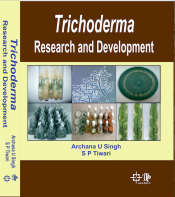
Trichoderma Research and Development by Archana U. Singh and S. P. Tiwari.
264 pages · English · Published 2021
Subjects: Agriculture, Plant Pathology, Plant Breeding and Genetics
Archana U. Singh and S. P. Tiwari
Further author information is not yet available.
Contents are not yet available for this title.
Agriculture · Botany · Horticulture · Horticulture
Agriculture · Plant Pathology

Agriculture · Botany · Medicinal Plants/ Flora/ Pharmacy · Plant Pathology

Agriculture · Botany · Medicinal Plants/ Flora/ Pharmacy · Plant Pathology
Agriculture · Botany · Biodiversity · Environment/Forestry

Sociology/Rural Development /Extension · Agriculture Extension/Rural Development · Social Sciences

English Language and Literature · General

Agriculture · General